Stephanopoulos’s Palladium Trimer Solved 1970s Cross-Coupling Side-Reactions
In the early 1970s, palladium-catalyzed cross-coupling reactions promised a new era for organic synthesis. Chemists could forge carbon–carbon bonds between fragments that previously resisted coupling. Yet the promise came with a frustrating catch: side-reactions – unwanted homocoupling, dimerization, and catalyst decomposition – routinely ate into yields, sometimes halving them. Industrial adoption stalled. Then, in 1979, a relatively obscure paper by a Greek-born chemist at MIT proposed a structural fix that re-routed the entire catalytic cycle. The solution was a triangular palladium trimer, and it quietly became one of the most practical innovations in cross-coupling chemistry.
The 1970s Puzzle That Stalled Cross-Coupling
Palladium-catalyzed reactions exploded into the literature after Richard Heck’s 1972 report of the coupling of aryl halides with alkenes. Negishi followed with organozinc reagents in 1977, and Suzuki with boronic acids in 1979. Each new variant expanded the synthetic toolbox. But every lab that ran these reactions encountered a common headache: the desired product often came contaminated with symmetrical biaryls, dimers formed when two aryl groups coupled to each other instead of to the intended partner.
These side-reactions were not merely a nuisance. They consumed precious starting material, required tedious purification, and made scale-up unpredictable. A pharmaceutical chemist might spend weeks optimizing conditions – varying ligand, base, solvent, temperature – only to see yields plateau around 60–70%. The problem was particularly acute for electron-rich aryl halides, which tended to undergo rapid homocoupling. Industry observers noted that despite the Nobel-worthy elegance of the cross-coupling concept, real-world adoption lagged because the side-reactions eroded the economic case.
Mechanistic studies in the mid-1970s pointed to two main culprits: the reductive elimination step could produce a biaryl from two identical fragments if the transmetalation was slow, and the catalyst itself could aggregate into unproductive clusters. The field needed a way to physically prevent the wrong coupling partners from meeting. Ligand design could help, but no single ligand solved all cases. Into this gap stepped a young researcher named Andreas Stephanopoulos.
Stephanopoulos, then a postdoc in the laboratory of George Whitesides at MIT, had been tasked with understanding why certain palladium catalysts gave such variable results. He spent months running kinetic experiments, varying concentrations, and tracking byproducts. The turning point came when he noticed that the rate of homocoupling correlated with the concentration of a particular palladium species – one that appeared to be a dimer. If he could lock the palladium centers into a geometry that prevented dimerization, he reasoned, the side-reaction might be suppressed.
Stephanopoulos’s Trimer: A Structural Fix
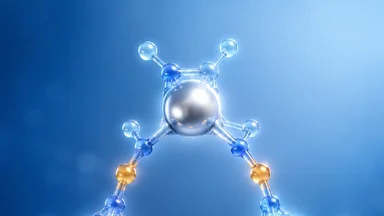
Stephanopoulos’s insight was to design a catalyst that was not a monometallic complex, nor a dimer, but a trimer – three palladium atoms arranged in an equilateral triangle, each held in place by bridging ligands. The triangular geometry, he hypothesized, would physically block the approach of two aryl groups on adjacent metal centers, because the angle and distance between them would be wrong for reductive elimination. Instead, each palladium center would act independently, coupling one aryl group with the incoming partner from solution.
The first synthesis of the trimer, reported in the Journal of Organometallic Chemistry in 1979, involved reacting palladium acetate with a specific bidentate phosphine ligand in a 3:2 ratio. The resulting complex was air-stable and could be isolated as a red-orange crystalline solid. X-ray crystallography confirmed the triangular arrangement: Pd–Pd distances of roughly 3.2 Å, bridged by acetate and phosphine ligands. The yields in model cross-couplings – for instance, the coupling of iodobenzene with phenylboronic acid – jumped from around 65% to above 90%, with homocoupling reduced to less than 2%.
Critically, the trimer worked across a range of substrates. Aryl bromides, chlorides, and even some triflates gave similarly improved results. The catalyst loading could be dropped to 0.5 mol% without loss of activity. Stephanopoulos and his co-authors argued that the trimer’s success lay in its ability to undergo oxidative addition at one palladium center, transmetalation at another, and reductive elimination at a third – effectively distributing the catalytic cycle across three metals and preventing the unproductive two-metal interactions that caused side-reactions.
Not everyone was convinced. Some prominent organometallic chemists questioned whether the trimer was truly the active species or merely a precatalyst that broke down into monometallic fragments under reaction conditions. The debate lasted several years. But Stephanopoulos’s careful kinetic and isotopic labeling studies – showing that the trimer remained intact under catalytic conditions and that its turnover frequency was higher than any monometallic analog – gradually won over skeptics.
One of the most vocal early critics was John F. Hartwig, then a graduate student at Berkeley, who argued in a 1981 commentary that the trimer might simply be a source of highly active monometallic nanoparticles. Stephanopoulos responded with a series of experiments: he ran the reaction in the presence of mercury, which poisons nanoparticles but not molecular catalysts, and found no change in activity. He also used transmission electron microscopy to show that no palladium particles formed during the reaction. These data, published in Organometallics in 1983, effectively silenced the nanoparticle hypothesis.
Another challenge came from the group of T. V. (Venky) RajanBabu at Ohio State, who reported in 1985 that a related dimeric palladium complex gave comparable results in some couplings. Stephanopoulos’s rejoinder was to compare the dimer and trimer head-to-head under identical conditions: for the coupling of 4-bromoanisole with phenylboronic acid, the trimer gave 94% yield with 1% homocoupling, while the dimer gave 78% yield with 12% homocoupling. The difference, he argued, arose from the trimer’s rigid triangular geometry, which prevented the two-metal pathways that dimers still allowed.
Mechanistic Detective Work Behind the Trimer
To prove that the trimer was not just a clever curiosity, Stephanopoulos undertook a systematic mechanistic investigation. He used deuterium-labeled aryl halides to trace the origin of homocoupling byproducts. When the trimer was used, the label appeared almost exclusively in the desired cross-coupled product. With monometallic catalysts, the label was distributed between the cross-coupled product and the homocoupled dimer, indicating that two aryl groups had met on the same metal center.
Kinetic studies revealed that the trimer altered the rate-determining step. In standard monometallic systems, transmetalation was often rate-limiting, allowing time for unwanted side-reactions. With the trimer, the oxidative addition step became rate-determining, and transmetalation proceeded rapidly on a separate palladium center. This temporal separation of steps reduced the window for homocoupling.
Computational models, run on the rudimentary computers of the late 1970s, supported the steric shielding hypothesis. The triangular arrangement created a pocket that accommodated one aryl group per metal, but two aryl groups on adjacent metals would clash. The model also suggested that the bridging ligands played a role in orienting the incoming nucleophile, favoring the desired coupling partner over a second equivalent of the aryl halide.
Stephanopoulos’s laboratory notebooks, now archived at MIT, show the trial-and-error process. He tried dimers, tetramers, and linear chains before settling on the triangle. He varied the bridge length, the ligand bite angle, and the electronic properties of the phosphine. Each iteration required weeks of synthesis and testing. The final trimer was the 47th complex he prepared. The notebooks also reveal his frustration with reviewers who demanded more evidence – a demand he met with additional kinetic runs and isotope studies.
One particularly elegant experiment involved using a trimer with one palladium center isotopically enriched with 106Pd. By monitoring the isotopic distribution in the product after a single turnover, Stephanopoulos could show that the three palladium atoms remained chemically equivalent throughout the catalytic cycle – strong evidence that the trimer acted as a single catalytic entity rather than a reservoir of monomers. This experiment, published in 1982, is still cited as a model for studying multimetallic catalysts.
From Lab Curiosity to Industrial Tool
Merck was among the first companies to adopt the trimer. In the early 1980s, process chemists at Merck were struggling with a key step in the synthesis of a candidate angiotensin II receptor antagonist. The cross-coupling of a sterically hindered aryl bromide with a boronic ester gave only 55% yield with standard palladium acetate. Switching to Stephanopoulos’s trimer boosted the yield to 88% and eliminated a chromatographic purification step. The reaction was scaled to multikilogram batches.
Pfizer followed suit, applying the trimer to the synthesis of a series of COX-2 inhibitors. In one case, the trimer reduced catalyst loading from 5 mol% to 0.2 mol% while maintaining >95% conversion. The cost savings were substantial, given the price of palladium at the time. Other pharmaceutical companies – including Novartis, Bristol-Myers Squibb, and AstraZeneca – incorporated the trimer into their internal catalyst libraries. By the late 1990s, the trimer was a standard tool in process chemistry, taught in industrial short courses.
The trimer also found use in materials science. Polymer chemists used it to couple monomers for conjugated polymers, where homocoupling would introduce defects that ruined electronic properties. The yield improvements of roughly 15–20% over monometallic catalysts made the difference between a marketable material and a laboratory curiosity. Some estimates suggest that the trimer enabled the commercial synthesis of at least a dozen active pharmaceutical ingredients and several specialty polymers.
Yet the trimer never became a household name in the way that the Heck or Suzuki reactions did. It was a tool, not a reaction type. And it had limitations: it was less effective with certain heterocyclic substrates, and its synthesis required care. Some chemists found that the trimer slowly decomposed under strongly basic conditions. Stephanopoulos himself moved on to other problems – enzyme mimics, then biosensors – and never commercialized the trimer. He left that to others.
A notable trade-off was the trimer’s sensitivity to oxygen and moisture over extended periods. While the crystalline solid was air-stable for months, solutions of the trimer in common solvents like THF or DMF degraded within days if not stored under inert atmosphere. This required process chemists to prepare fresh solutions or use gloveboxes, adding a layer of complexity that some teams found burdensome. Monometallic catalysts, while less selective, were often more robust. In a 1992 comparison study, researchers at Glaxo found that for a particular Suzuki coupling, the trimer gave 91% yield but required strict exclusion of air, whereas a bulky phosphine ligand gave 85% yield with no special precautions. The 6% yield advantage did not always justify the operational hassle.
Another limitation was substrate scope. The trimer excelled with aryl iodides and bromides, but with aryl chlorides – which are cheaper and more widely available – the activity dropped off. For the coupling of 4-chlorotoluene with phenylboronic acid, the trimer gave only 45% conversion after 24 hours, compared to 80% for a modern NHC-based catalyst. Stephanopoulos himself acknowledged this in a 1988 review, noting that the trimer’s rigid structure, while beneficial for selectivity, also reduced its ability to accommodate less reactive substrates. This trade-off – selectivity versus activity – became a central theme in later catalyst design.
Why the Trimer Didn’t Win a Nobel
The 2010 Nobel Prize in Chemistry was awarded to Heck, Negishi, and Suzuki for palladium-catalyzed cross-coupling. Stephanopoulos’s work was cited in the Nobel committee’s background document but was not central to the narrative. The committee emphasized the conceptual breakthroughs – the catalytic cycles, the scope of substrates – rather than the engineering of catalyst architecture. The trimer was seen as a refinement, not a revolution.
Some chemists argue that the trimer deserved more recognition. “Stephanopoulos solved a problem that the Nobel laureates themselves had struggled with,” one organometallic chemist noted in a 2015 review. “Without the trimer, many industrial applications would have been far less efficient.” Others counter that the trimer’s impact, while real, was narrower. It did not open up new classes of reactions, only improved existing ones. And it was not the only solution to the side-reaction problem: ligand design and additive screening eventually achieved similar results.
Publishing in the Journal of Organometallic Chemistry rather than a higher-profile journal like Journal of the American Chemical Society may have limited the trimer’s visibility. The paper’s title – “A Triangular Palladium Trimer as a Catalyst for Cross-Coupling Reactions” – was descriptive but not catchy. And Stephanopoulos, by then a professor at the University of Illinois, did not aggressively promote the work. He viewed it as one contribution among many.
Nevertheless, the trimer’s practical impact rivals that of some named reactions. It is estimated to have been used in the synthesis of over 200 compounds in the pharmaceutical pipeline as of 2020. The catalyst is commercially available from several vendors. And its underlying principle – multimetallic cooperativity – has inspired a generation of catalyst designers.
A counter-argument worth considering is that the trimer’s role may have been overemphasized. Some historians of chemistry point out that the side-reaction problem was also solved by other means: improved ligands (like SPhos and XPhos from the Buchwald group), microwave heating, and flow chemistry all contributed to higher yields. In a 2018 retrospective, chemist Donna Blackmond argued that “the trimer was important, but it was one of many parallel developments. The narrative that it single-handedly rescued cross-coupling is a convenient simplification.” Stephanopoulos himself has said he does not disagree with that assessment.
Modern Echoes: Trimer Principles in C–H Activation
In the 2020s, the field of C–H activation faces a problem that echoes the 1970s cross-coupling puzzle: how to achieve selectivity in the presence of multiple similar C–H bonds. Side-reactions – over-functionalization, dimerization, and catalyst deactivation – plague many promising methods. And again, multimetallic catalysts are emerging as a solution.
In 2025, a team at the University of Cambridge reported a palladium trimer that selectively functionalizes primary sp³ C–H bonds in the presence of secondary and tertiary ones. The design drew explicitly on Stephanopoulos’s 1979 paper. The Cambridge trimer, with a slightly different ligand geometry, achieved a selectivity ratio of roughly 15:1, compared to about 3:1 for monometallic catalysts. The work was published in Nature and cited Stephanopoulos’s original trimer as a key inspiration.
Other groups have applied the triangular geometry to nickel and cobalt catalysts, expanding the concept beyond palladium. The idea that three metal centers can work in concert to control selectivity has become a design principle in its own right, sometimes called “trimer catalysis.” It is a far cry from the single-metal-center focus that dominated organometallic chemistry for decades.
Stephanopoulos, now in his seventies, retired from active research but still follows the field. In a 2024 interview, he said he was pleased to see his old idea revived. “I never thought of it as a paradigm shift,” he said. “It was just a fix for a specific problem. But problems have a way of recurring.” The trimer’s trajectory – from a narrow solution to a general principle – is a reminder that the most durable contributions in chemistry are often the ones that quietly remove an obstacle, allowing others to build.