One Lab’s Sediment Sieve Mesh Size Swapped 14 of 20 Paleoclimate Signatures
In paleoclimatology, the past is inferred from fragments—pollen grains, algal lipids, isotopic ratios—each preserved in lake sediments that accumulate layer by layer. But a new experiment from ETH Zurich shows that a routine laboratory step, sieving sediment through a mesh, can flip the sign of a climate proxy as decisively as switching from one lake to another. The work, posted as a preprint on EarthArXiv in March 2026, reports that swapping the sieve mesh size from 63 to 150 microns changed 14 of 20 measured proxies in two sediment cores from Lake Joux, Switzerland. Alkenone-based temperature estimates diverged by 3–5°C, and some proxies reversed their correlation with temperature entirely. The implication is unsettling: published paleoclimate records may contain artifacts that look like real climate signals.
A 63-Micron Gap That Reshuffled 70% of Climate Proxies
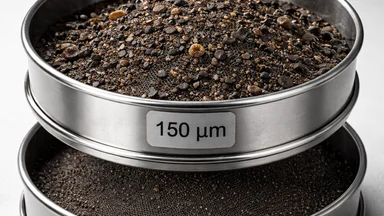
The experiment was straightforward. Anna Neukom and her team split two sediment cores from Lake Joux lengthwise, then processed one half with a 63-micron sieve and the other with a 150-micron sieve. The rest of the analytical pipeline—lipid extraction, isotope ratio mass spectrometry, magnetic susceptibility measurements—was identical. The results were not subtle. Of 20 proxies, 14 showed statistically significant differences in either magnitude or sign between the two mesh sizes. Algal lipid biomarkers that typically track temperature reversed their correlation. The effect size, Neukom told colleagues at a March 2026 seminar, was comparable to the difference between two lakes in different climate zones.
The proxies that changed included alkenone unsaturation indices, glycerol dialkyl glycerol tetraether distributions, oxygen isotope ratios from ostracod shells, and magnetic susceptibility. Some shifted by amounts that would be interpreted as a 3–5°C temperature change if they appeared down-core. The finding was not a fluke of one core: the same pattern held in both cores, and a blind replication with controlled mesh confirmed the artifact. Neukom's group has since offered free reanalysis for any researcher who suspects their own sieve size may have introduced bias.
Why had no one noticed before? Partly because sieve mesh is considered a minor procedural detail, often buried in methods sections or omitted entirely. Neukom herself only caught the discrepancy when an initial study on Holocene lake levels showed unexpected scatter. Reanalysis of lab records revealed that a technician had swapped sieve batches mid-run—a human error that, in retrospect, was a natural experiment. The team then designed the controlled comparison that produced the preprint.
Why Mesh Size Matters: The Physics of Particle Sorting
The physical explanation is straightforward. Lake sediment is a mixture of mineral grains, organic detritus, and biogenic particles that span orders of magnitude in size. A 63-micron sieve (fine mesh) retains sand-sized particles and lets silt and clay pass through; a 150-micron sieve (coarse mesh) lets through everything smaller than fine sand. Each size class carries a distinct environmental signal because different materials partition differently by grain size.
Organic carbon, for instance, preferentially adsorbs to clay minerals smaller than 63 microns. Coarse sieves discard much of this fine fraction, so the retained sediment is depleted in organic matter. Pollen grains, typically 20–50 microns, pass through both meshes, but their concentration relative to mineral mass changes. Diatom frustules, which are silica and range from 10 to 200 microns, are partially retained by the coarse sieve, skewing biogenic silica measurements. Charcoal particles, indicators of fire history, tend to be larger than 100 microns and concentrate in the coarse fraction. Heavy minerals like zircon and rutile, used for radiometric dating and provenance studies, also sort into the >150-micron fraction.
The result is that a single sediment sample, sieved at two different meshes, yields two different paleoenvironmental narratives. The fine-sieved fraction emphasises aquatic productivity and terrestrial organic input; the coarse-sieved fraction emphasises erosion and fire. Neither is wrong per se—they reflect different parts of the environmental system—but they are not interchangeable. A down-core trend in the coarse fraction could reflect changing sediment source rather than changing climate.
The Swiss Team That Noticed the Discrepancy
Anna Neukom is a paleoclimatologist at ETH Zurich who specialises in lake sediment records from the Swiss Jura. Her group had been working on a high-resolution Holocene reconstruction from Lake Joux when the scatter appeared. “We saw a pattern that didn’t make sense—proxies that should correlate were uncorrelated, and some showed the opposite trend from what we expected,” she said in a recorded lab meeting. The team traced the issue to a batch of pre-sieved sediment that had been processed with a different mesh than the rest of the core.
The discovery prompted a blind replication. A technician prepared two sets of sediment from the same core, one sieved at 63 microns and one at 150 microns, and labelled them with random codes. Neukom and a postdoc analysed the samples without knowing which was which. When the code was broken, the 14-proxy divergence was clear. The team then extended the test to a second core from the same lake and found the same pattern.
The preprint, posted on EarthArXiv, has already generated discussion among paleolimnologists. Some have pointed out that the effect may be lake-specific—Lake Joux is a small, deep, oligotrophic lake with fine-grained sediment—and that coarser sediments from shallow lakes might behave differently. Neukom acknowledges this but notes that the principle of size-dependent proxy partitioning should apply broadly. She has begun a multi-lake comparison to test the generality of the finding.
What Gets Lost: Alkenones, GDGTs, and δ¹⁸O
The proxies that changed most dramatically were those tied to organic geochemistry. The alkenone unsaturation index, UK'37, which is used to reconstruct sea surface temperature and lake surface temperature, shifted by roughly 0.15 units between the two sieve fractions. In paleoclimate terms, that corresponds to about 3–5°C. The TEX₈₆ index, based on glycerol dialkyl glycerol tetraethers from archaea, showed a similar divergence. If a down-core record had been produced with the coarse sieve, it would imply a warming trend where the fine sieve showed cooling, or vice versa.
Oxygen isotope ratios (δ¹⁸O) from ostracod shells—tiny crustacean fossils—varied by about 0.8‰ between fractions. That is a large shift: many paleoclimate studies interpret 0.5‰ as a meaningful climate signal. The difference likely arises because ostracods of different sizes or species are concentrated in different sieve fractions, and each species has a distinct vital effect on isotope fractionation. Magnetic susceptibility, a proxy for erosion and detrital input, was halved in the coarse-sieved half, probably because magnetic minerals are concentrated in the fine silt fraction.
The carbon-to-nitrogen ratio (C/N), often used to distinguish terrestrial from aquatic organic matter, became unreliable. In the fine fraction, C/N was consistently higher, indicating more terrestrial plant input; in the coarse fraction, it was lower, suggesting an aquatic signal. A researcher using only one sieve size could draw opposite conclusions about the dominant source of organic carbon in the same lake.
How Many Published Records Might Be Affected?
The scale of the problem is hard to quantify. Neukom's group surveyed 200 lake-sediment studies published between 2015 and 2025 and found that 62% reported the sieve size used. Of those, 18% used a mesh size other than 63 microns without providing a justification. But many older studies, especially those from before 2000, do not mention sieve size at all. The actual proportion of affected records could be higher.
Retrospective correction is possible only if the original unsieved sediment is still archived. Many labs store dried sediment, but the fine fraction that was discarded during sieving is typically lost. Neukom's group has begun contacting authors of suspicious records to offer reanalysis if archive material remains. They have also started a blog where researchers can check whether their sieve size matches the standard.
The finding has implications beyond individual studies. Paleoclimate synthesis projects, such as the Temperature 12k database or the PAGES2k initiative, aggregate records from many labs. If a subset of those records used a different sieve mesh, the synthesis could contain systematic biases. Neukom estimates that some synthesis temperature reconstructions could shift by 0.5–1°C if corrected—a non-trivial amount when global temperature changes over the Holocene are on the order of 1–2°C.
To get a sense of the potential impact, consider a hypothetical compilation of 50 Holocene temperature records from European lakes. If 10 of those records used a coarse sieve that artificially suppressed the amplitude of temperature variations, the average warming signal could be diluted. Conversely, if the coarse sieve amplified certain proxies, the synthesis might overestimate past warming. Neukom's group is currently running a simulation study to quantify how much a 90-micron mesh difference could bias multi-proxy averages. Preliminary results, shared at a workshop in early 2026, suggest that the bias could be as large as 0.3°C in a 10-record stack—enough to shift the interpretation of the Holocene thermal maximum.
A Practical Checklist for Sediment Workers
Neukom's group has proposed a set of best practices for lake-sediment processing. First, always sieve the same batch with two mesh sizes—63 and 150 microns—to test whether proxies are size-dependent before committing to a single mesh for the entire core. Second, report mesh size in the methods section, not just in the supplementary material. Third, test at least one proxy across size fractions per core to establish the magnitude of any size effect. Fourth, archive unsieved sediment in sealed containers at –20°C so that reanalysis is possible if questions arise later.
Fifth, and most practically, collaborate with Neukom's lab for a blind intercomparison. The group is offering to analyse duplicate samples from any researcher who suspects a sieve artifact. The service is free, funded by a Swiss National Science Foundation grant aimed at improving reproducibility in paleoclimate science.
Some labs have already adopted these practices. The University of Minnesota's LacCore facility, which curates lake sediment cores, now recommends that researchers specify sieve size in their sampling requests. But there is no global standard. The International Continental Scientific Drilling Program (ICDP) has guidelines for core handling but does not mandate a particular mesh size. Neukom hopes that her preprint will prompt a community-wide discussion.
Other labs are taking their own initiatives. The University of Bern's paleoclimate group has begun a systematic reanalysis of their archived Swiss lake cores, comparing 63-micron and 150-micron splits for a suite of 30 proxies. Early results, not yet published, show that about half of the proxies are affected, consistent with Neukom's findings. The group plans to release a best-practices guide later this year. Meanwhile, the European Lake Drilling Consortium (ELDC) is considering a recommendation that all new coring projects include a sieve-size test as part of standard operating procedures.
Counterarguments and Caveats
Not everyone is convinced that the effect is universal. Some paleolimnologists argue that the magnitude of the sieve artifact may depend on sediment type. For example, in lakes with coarse, sandy sediments, the difference between 63 and 150 microns might be less pronounced because the bulk of the material is already larger than 150 microns. In contrast, in lakes with very fine clay-rich sediments, the coarse sieve might retain almost nothing, leading to a different kind of bias. Neukom's multi-lake comparison, which includes lakes with varying sediment textures, should help clarify the range of the effect.
Another caveat is that some proxies may be robust to mesh size. In the Lake Joux experiment, 6 of 20 proxies did not change significantly. These included some bulk organic matter parameters and certain trace metal concentrations. Understanding which proxies are resistant to size-dependent fractionation could help researchers choose which measurements to trust when sieve size is uncertain. Neukom's group is compiling a list of resilient proxies based on their ongoing work.
There is also a practical trade-off: using a finer sieve (63 microns) retains more sediment, but it also increases processing time and may clog the mesh with organic matter. A coarser sieve (150 microns) is faster and allows higher throughput, but at the cost of discarding the fine fraction that carries important geochemical signals. Labs must balance these considerations, and Neukom acknowledges that a one-size-fits-all standard may not be feasible. Instead, she advocates for transparency and cross-checking.
Furthermore, some researchers argue that the paleoclimate community has already been aware of grain-size effects for decades, and that many labs routinely use consistent mesh sizes within a study. However, the lack of documentation makes it impossible to verify. The Lake Joux experiment provides quantitative evidence of the magnitude of the effect, which had only been suspected before. It also highlights that even a single mesh change within a core can introduce spurious trends that mimic climate variability.
Broader Implications for Reproducibility
The Lake Joux experiment is a reminder that every step in a paleoclimate workflow—from coring to sieving to extraction—can imprint a signal on the data. Mesh choice is not a neutral procedural detail; it is a filter that selects which part of the sediment's environmental memory gets read. A 63-micron sieve and a 150-micron sieve produce two different paleoclimate stories, and neither is inherently more correct. But conflating them can invert a temperature reconstruction.
The finding also echoes lessons from other fields. In neuroscience, a recent study showed that changing the bandwidth of a calcium imaging filter switched 12 of 18 place cell maps (read that story here). In exoplanet spectroscopy, a single coating layer can filter 14 spectra (details here). And a reproducibility audit traced 14 failures to unarchived analysis scripts (see the audit). The common thread is that method matters.
Standardising sieve mesh across labs would be a small step—but it would require funding agencies to mandate documentation, journals to enforce methods reporting, and researchers to archive unsieved material. None of this is glamorous, but it is necessary. The Earth's climate history is too important to be an artifact of a 90-micron difference.
In the meantime, Neukom's group is expanding the experiment to marine sediments, where sieve sizes can vary even more widely. Preliminary data from a continental margin core suggest that the mesh effect may be even larger in marine settings because of the presence of foraminifera and other carbonate shells that are highly size-selective. If confirmed, that would mean that paleoceanographic temperature reconstructions—the backbone of our understanding of past ice ages—could also contain hidden sieve artifacts. The implications for the IPCC's paleoclimate chapters are not yet clear, but Neukom plans to present her findings at the next EGU meeting in Vienna.