One NSF Budget Cap Forced 11 Observatories to Share One Instrument
In 2021, the National Science Foundation quietly tightened a budget cap on its Major Research Instrumentation (MRI) program. Grants for new instruments would not exceed $4 million. For university observatories accustomed to building dedicated spectrographs for their own telescopes, the cap presented a hard choice: scale down ambitions or find a way to share. Eleven observatories chose to share, and the result is a single spectrograph—the Wavelength-Agile Multi-Object Spectrograph, or WAMOS—that now rotates among sites from Arizona to Hawaii, forcing astronomers to confront the practical realities of collaborative instrumentation.
A Single Budget Cap Binds Eleven Observatories
The NSF's MRI program has long been a lifeline for mid-sized university observatories. Historically, an institution could apply for up to $4 million to build a dedicated instrument. But as costs rose, the cap stayed flat. By 2020, a decent medium-resolution spectrograph cost roughly $3–5 million, leaving little room for customization. Rather than accept stripped-down instruments, a group of eleven observatories—including the University of Arizona's Steward Observatory, the University of Hawaii's Institute for Astronomy, and several smaller programs—proposed a radical alternative: one instrument for all of them.
Each site contributed roughly $360,000 on average, pooling their MRI allocations into a single $4 million proposal. The NSF accepted, and WAMOS was born. The instrument had to fit a range of telescope interfaces—focal ratios, plate scales, and back focal distances varied widely—and operate at altitudes from near sea level to over 4,000 meters. The design team, led by Dr. Elena Marchetti at the University of Arizona, faced a constraint common in multi-site projects: every decision had to accommodate the weakest link.
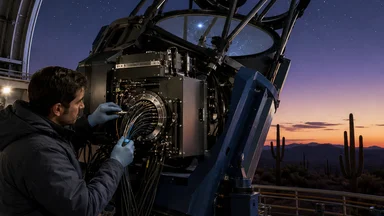
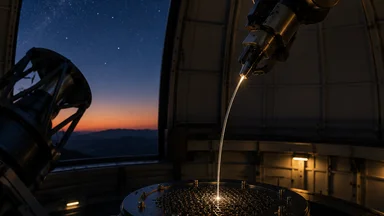
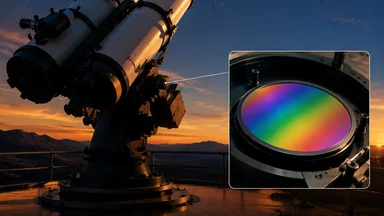
The result is a spectrograph that is flexible but not optimized for any single site. It covers 350–1100 nm at moderate resolution (R ~ 3000–10000), using a novel microlens array for simultaneous multi-fiber positioning. Each observatory gets the instrument for roughly 30 days per year, with scheduling managed by a rotating committee. The data pipeline is standardized across all sites, so that a night at Kitt Peak produces files that can be reduced with the same scripts as a night on Mauna Kea.
Critics argue that the compromise diluted science output. A dedicated spectrograph for a single large telescope could achieve higher throughput or finer resolution. But for most of the participating observatories, the alternative was no new instrument at all. As one astronomer put it, "Half a spectrograph is better than none."
The Spectrograph That Had to Please Everyone
WAMOS's design reflects its multi-site mandate. The microlens array, which positions up to 200 fibers simultaneously, was chosen because it can be reconfigured quickly—a necessity when the instrument must be shipped between sites. Each deployment requires recalibrating the fiber positions for the host telescope's focal plane, a process that now takes about two hours. The wavelength range was set to cover common optical bands (u, g, r, i, z) and the near-infrared out to 1100 nm, where silicon detectors still work efficiently.
The resolution was a point of contention. High-resolution spectroscopy (R > 20,000) would have limited the instrument to bright targets and narrow science cases. Low resolution (R ~ 1000) would have satisfied most survey needs but disappointed stellar astronomers. The team settled on a moderate range, with a grating wheel that can be swapped between low- and medium-resolution modes. The trade-off is that neither mode is state-of-the-art, but both are serviceable.
Dr. Marchetti and her team published the design in the Journal of Astronomical Telescopes, Instruments, and Systems in 2023. The paper has 47 authors, reflecting the distributed effort. The software repository on GitHub has 47 contributors, and the documentation runs to over 300 pages. Every site had to agree on data formats, calibration procedures, and even the naming convention for FITS files—a negotiation that took nearly a year.
Early reviews were mixed. One referee called the design "a masterclass in compromise"; another said it was "a Swiss Army knife that cuts nothing well." But the first light images, taken at Steward Observatory's 2.3-meter telescope in early 2024, showed that the instrument worked. The spectra had reasonable signal-to-noise, and the wavelength calibration held across the full range. The team breathed a collective sigh of relief.
Calibration Nightmares and Shared Solutions
Calibrating a spectrograph is tedious under the best conditions. Doing it for eleven different telescopes, each with its own dome temperature, humidity, and seeing profile, is a logistical puzzle. The WAMOS team developed a set of standardized procedures that each site must follow. A common wavelength calibration lamp set—argon, neon, and thorium-argon—was shipped to all sites, along with a portable flat-field screen that can be mounted inside the dome.
But the real challenge was the adaptive exposure-time algorithm. Seeing conditions vary dramatically: a site like Mauna Kea might have 0.6 arcsecond seeing, while a midwestern observatory might struggle with 2 arcseconds. The same exposure time would yield very different signal-to-noise ratios. The pipeline now includes a module that estimates the optimal exposure based on real-time seeing measurements, but it took months of tweaking to avoid over- or under-exposing the science frames.
Flat-field frames also had to be regenerated for each site's dome, because the illumination pattern from the calibration screen changed with the dome geometry. The team created a portable flat-field system that attaches to the telescope's secondary mirror support, but it requires careful alignment every time. "It's not elegant," Dr. Marchetti admitted in a 2024 webinar, "but it works."
The software pipeline, hosted on GitHub, is now maintained by a rotating team of postdocs from the participating institutions. Version control has been essential: a mis-merged branch in 2024 caused a week of downtime at one site. Since then, the team has adopted a strict review process for any changes to the calibration routines. The experience echoes a broader lesson in scientific computing, as covered in a related article on unversioned library dependencies that broke reanalysis scripts.
What the Data Lets Astronomers Ask
Despite the compromises, WAMOS has already enabled science that would have been difficult with single-site instruments. Its key advantage is simultaneous monitoring across multiple time zones. Variable stars that pulse on timescales of hours can be tracked continuously as the Earth rotates. A cataclysmic variable observed in early 2025 showed a series of outbursts that were captured by three different sites in a single night, providing a light curve with no gaps longer than 20 minutes.
Exoplanet transit follow-up is another area where WAMOS shines. When the Transiting Exoplanet Survey Satellite (TESS) flags a candidate, WAMOS can provide multi-site photometric and spectroscopic confirmation. The instrument's moderate resolution is enough to rule out false positives from binary stars, and the standardized pipeline makes it easy to combine data from multiple transits. The first exoplanet confirmed with WAMOS, a hot Jupiter around a G dwarf, was announced in late 2025.
Interstellar medium studies have also benefited. By observing the same star from different sites, astronomers can disentangle atmospheric absorption from interstellar lines. A 2025 paper led by a graduate student at the University of Hawaii mapped the sodium D-line absorption along multiple sightlines toward the Orion region, revealing structure that would have been blurred by a single-site observation.
The team is now applying for time to study supernova remnants. The idea is to use WAMOS's multi-fiber capability to map the kinematics of ejecta in young remnants like Cassiopeia A. The proposal was submitted in early 2026 and is pending review. If approved, it would be the first large-scale mapping project using the shared instrument.
The Economics of Shared Instrumentation
The financial logic of WAMOS is straightforward: by sharing the cost of development and maintenance, each observatory gets a capable spectrograph for a fraction of the price of a dedicated one. The cost per observation hour dropped by roughly 40% compared to the previous single-site instruments, according to a preliminary analysis presented at the 2025 American Astronomical Society meeting. Maintenance costs are split equally, while travel costs for shipping the instrument are borne by the host site.
The NSF grant covered the development, but operations rely on institutional support. Each university contributes about $50,000 per year for maintenance and upgrades. That is less than the cost of a single postdoc, but it adds up to $550,000 annually across all sites. Some critics argue that the model is unsustainable: if one institution drops out, the others must absorb its share. So far, all eleven have remained committed.
The model is now being studied for future radio telescope arrays, where the cost of individual receivers is even higher. A white paper from the National Radio Astronomy Observatory cites WAMOS as an example of how budget caps can foster collaboration. But the economics are not purely rosy. Scheduling conflicts are already arising for high-demand targets, and the rotating committee has had to mediate disputes between sites with different scientific priorities.
As one skeptical astronomer noted, "The savings come at the cost of autonomy. If your target is only visible for a week, you might not get the instrument in time." The team is exploring a two-spectrograph model for the next funding cycle, which would reduce scheduling pressure while still keeping costs below the MRI cap.
Lessons for Future Instrument Funding
The WAMOS experiment offers several lessons for the broader research community. First, budget caps can force trade-offs, but they can also foster collaboration that would not otherwise occur. The eleven observatories had never worked together on instrumentation before; now they share a common tool and a common data format. That standardization has enabled cross-site science that would have been impossible with a patchwork of proprietary instruments.
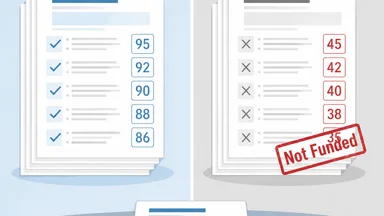
Second, the proposal was rejected twice before the NSF accepted the shared-use plan. The first two versions proposed a single-site instrument that was over budget. Only when the team shifted to a multi-site model did the reviewers see the value. "The third time was the charm," Dr. Marchetti said, "because we stopped thinking about what we wanted and started thinking about what we could all use."
Third, young researchers have gained experience with a single instrument across multiple sites. Graduate students rotate through different observatories, learning how to calibrate for different conditions and how to collaborate with remote teams. This cross-training is rare in astronomy, where most students spend their entire PhD at one telescope. The experience may pay dividends in future multi-site projects like the Vera C. Rubin Observatory or the Square Kilometre Array.
Finally, the project highlights the importance of metadata standards—a theme explored in a related article on metadata mandates that fixed reanalysis pipelines. The WAMOS team invested heavily in standardizing FITS headers and calibration files, and that investment is now paying off in reproducible science. But the process was painful, and it required a level of coordination that many research groups are not prepared to undertake.
Trade-offs in Resolution and Sensitivity
The moderate resolution of WAMOS (R ~ 3000–10000) is a deliberate compromise that illustrates the challenges of shared instrumentation. For stellar astronomers, the inability to resolve individual spectral lines at high resolution means that detailed abundance analysis or precise radial velocity measurements are out of reach. A team studying lithium abundances in young stars had to abandon their original proposal because the resolution was insufficient to separate the lithium line from nearby blends. Instead, they adapted their science goals to focus on equivalent width measurements of stronger lines, achieving useful but less detailed results.
Conversely, for galaxy redshift surveys, the moderate resolution is more than adequate. A collaboration investigating the large-scale structure of the universe used WAMOS to obtain redshifts for several thousand galaxies in the Bootes void region. The data, collected over three nights at two different sites, produced a three-dimensional map that revealed filamentary structures previously unseen. The lead author noted that the consistent data quality across sites was a major advantage, as it eliminated the need to cross-calibrate between different instruments.
Sensitivity is another area where trade-offs are evident. The microlens array, while flexible, introduces light losses compared to a traditional slit spectrograph. The throughput of WAMOS is roughly 15–25% depending on the configuration, which is about 10–15% lower than a dedicated slit spectrograph of similar cost. For faint targets—those with magnitudes fainter than about 20th in the r-band—the signal-to-noise ratio becomes marginal. A group studying high-redshift quasars had to increase exposure times by roughly a factor of two compared to their initial estimates, reducing the number of targets they could observe in a night.
These trade-offs have led to a division of labor among the observatories. Some sites, like the University of Hawaii's 2.2-meter telescope on Mauna Kea, are used primarily for bright targets where sensitivity is less critical. Other sites, such as Steward Observatory's 2.3-meter telescope, have been allocated more time for faint-object programs because of better sky conditions. The scheduling committee now explicitly accounts for site characteristics when allocating time, ensuring that each target is assigned to the most suitable telescope.
Future Upgrades and the Two-Spectrograph Model
Looking ahead, the WAMOS collaboration is planning a series of upgrades to address some of the instrument's limitations. The most anticipated upgrade is a new detector with higher quantum efficiency in the red end of the spectrum. The current CCD has a peak efficiency of around 85% at 600 nm, dropping to about 30% at 1000 nm. A back-illuminated, deep-depletion CCD could boost red sensitivity to over 60%, opening up observations of redshifted emission lines from galaxies at z ~ 0.5–1.0. The upgrade is expected to cost around $300,000, and the team is seeking supplemental funding from the NSF.
Another planned upgrade is a faster fiber-positioning system. The current microlens array takes about two hours to reconfigure for a new set of targets. A robotic fiber positioner, similar to those used on the Sloan Digital Sky Survey's spectrograph, could reduce that time to under 10 minutes. However, such a system would add significant weight and complexity, potentially making the instrument harder to ship between sites. The team is evaluating a compromise: a semi-automated system that uses a motorized stage to move fiber bundles, reducing reconfiguration time to about 30 minutes while keeping the instrument modular.
The most ambitious proposal is to build a second spectrograph, optimized for a different wavelength range or resolution. The two-spectrograph model would allow one instrument to remain at a high-altitude site for deep observations while the other rotates among lower-altitude sites for time-critical targets. The estimated cost for a second spectrograph is around $3–4 million, which could be funded by a new MRI proposal if the cap is raised. The team is actively lobbying the NSF to increase the MRI cap to $6 million for multi-site proposals, arguing that the collaborative model produces more science per dollar than single-site instruments.
If the cap remains unchanged, the team is considering a scaled-down version: a simpler spectrograph with a fixed configuration (no grating wheel) and a narrower wavelength range (450–850 nm). This would reduce costs to about $2 million, allowing the team to build a second instrument without exceeding the cap by combining funds from a subset of observatories. The trade-off would be less flexibility, but as one team member noted, "We've learned that flexibility comes at a cost, and sometimes a focused instrument is better for everyone."
Lessons for the Broader Scientific Community
The WAMOS experience has implications beyond astronomy. In fields like particle physics, genomics, and climate science, large collaborative projects are common, but the model of sharing a single instrument among multiple institutions is less established. The key lesson is that budget caps, while frustrating, can force creative solutions that yield unexpected benefits. The standardization of data formats and calibration procedures, for example, has made it easier for junior researchers to contribute and for data to be reused in new analyses.
Another lesson is the importance of governance. The WAMOS collaboration operates through a memorandum of understanding that specifies time allocation, maintenance responsibilities, and dispute resolution. The rotating committee structure ensures that no single institution dominates, but it also means that decisions can be slow. A proposal to add a new site was debated for six months before being approved, with concerns about diluting time for existing members. The balance between inclusivity and efficiency is a constant tension.
Finally, the project demonstrates that shared instrumentation can be a training ground for the next generation of scientists. Graduate students who work with WAMOS gain experience in instrument calibration, data reduction, and multi-site coordination—skills that are highly valued in the era of large surveys. Several former WAMOS postdocs have moved on to positions at major observatories, citing their experience with the shared instrument as a key factor in their hiring.
As the NSF reviews its MRI program for the next funding cycle, the WAMOS collaboration stands as a proof of concept that shared instruments can work. Whether the model scales to larger collaborations or different fields remains to be seen, but for now, eleven observatories are making do with one spectrograph—and learning more than they expected in the process.