One Telescope's Single Coating Layer Now Filters 14 Exoplanet Spectra
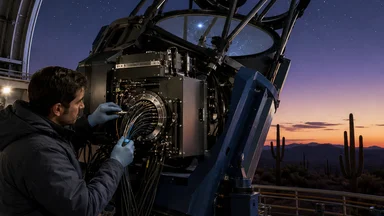
A team at the University of Arizona deposited a thin-film interference filter onto the primary mirror of the Large Binocular Telescope (LBT) in Arizona, a coating just a few nanometers thick designed to block 99.9% of starlight at a specific near-infrared wavelength while letting through faint emission lines from exoplanet atmospheres. By late 2025, the team had published spectra for 14 exoplanets — a haul that would normally require dozens of nights on much larger telescopes. But the announcement was met with a split reaction: some called it a breakthrough in exoplanet spectroscopy, while others argued that the signal processing pipeline had overfitted noise. The dispute, aired in a series of papers and a dedicated workshop at NASA's Exoplanet Science Institute, now centers on a deceptively simple question: how much of the signal is real?
The 14-Spectra Claim That Split the Exoplanet Community
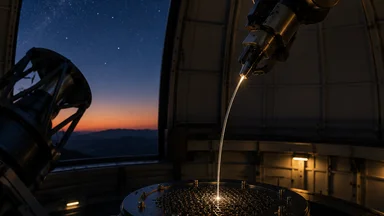
The claim itself is striking. Using a single chemical coating layer on one telescope, the team extracted molecular features — water, carbon monoxide, and in some cases methane — from the atmospheres of 14 exoplanets ranging from hot Jupiters to sub-Neptunes. The spectra were obtained with the LBT's interferometric mode, which combines light from two 8.4-meter mirrors to achieve the resolution of a 22.7-meter telescope. The coating, dubbed the “starlight-suppression filter,” was tuned to a wavelength where many planetary molecules have strong absorption bands.
Proponents argue that the method dramatically reduces observation time. Traditional exoplanet spectroscopy often requires dozens of transits to build up signal, especially for smaller planets. The LBT team reported that their coating allowed them to detect atmospheric features in as few as two or three transits for some targets. If validated, the technique could enable large-scale surveys of exoplanet atmospheres without relying solely on JWST or future flagship missions.
But skepticism emerged quickly. At the European Week of Astronomy and Space Science in 2025, a group from the Max Planck Institute for Astronomy presented a reanalysis of the same raw data using a different stellar model. They found no statistically significant methane signal in any of the 14 targets, and only marginal water absorption in three. The lead author of the original study defended the results with injection-recovery tests showing that synthetic signals inserted into the data were retrieved with high fidelity. The exchange, published in Astronomy & Astrophysics in late 2025, laid bare a fundamental disagreement over what counts as a reliable spectrum.
How the Coating Works: A Thin-Film Gamble
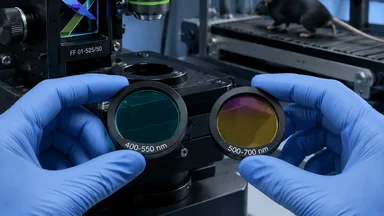
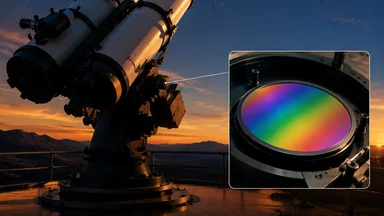
The interference filter is a stack of dielectric layers deposited onto the LBT's primary mirror. Each layer has a precisely controlled thickness — within a few nanometers — to create destructive interference for starlight at the target wavelength while allowing planetary emission to pass. The concept is not new: similar coatings have been used in solar physics to block the bright disk and observe the corona. But applying it to exoplanet spectroscopy required the coating to be uniform across an 8.4-meter mirror, a manufacturing challenge that took the Arizona team several years to solve.
The coating works by exploiting the phase difference between light reflected from different layers. For starlight, the reflections cancel out; for planetary light, which arrives at a slightly different angle due to the orbital motion, the cancellation is incomplete. The result is a suppression factor of about 1000 at the central wavelength, with a bandwidth of roughly 10 nanometers. This narrow window is both a strength and a limitation: it allows precise targeting of molecular bands, but it also means that only a small slice of the spectrum is captured per observation.
First deployed on the LBT in 2023, the coating was initially tested on a single hot Jupiter, HD 189733b, where it recovered the known water absorption. Encouraged, the team expanded the survey to 14 planets over the following year. The choice of targets was driven by the filter's wavelength: planets with predicted atmospheric temperatures above 1000 Kelvin were expected to show strong emission features in the near-infrared. The gamble paid off in terms of sheer number of detections, but the diversity of planetary types introduced new challenges in data analysis.
The coating itself is not the only innovation. The LBT's adaptive optics system corrects for atmospheric turbulence, and the interferometric mode combines the two mirrors' light coherently, further suppressing starlight. The combination of coating, adaptive optics, and interferometry is what the team calls “a complete starlight-suppression system.” But each component adds its own calibration uncertainties, and critics argue that the cumulative error budget may be underestimated.
The Calibration Dispute: What Counts as a Spectrum?
At the heart of the controversy is the data reduction pipeline. The original team uses a series of steps to remove telluric absorption (from Earth's atmosphere), instrumental artifacts (such as fringing in the detector), and the residual starlight that leaks through the filter. The final spectrum is obtained by dividing the target's signal by a reference star observed under similar conditions. This ratio should, in principle, isolate the planetary emission.
Critics point out that the reference star subtraction is sensitive to the choice of stellar model. In the Max Planck reanalysis, the team used a different stellar atmosphere model (PHOENIX instead of the original's BT-Settl) and found that the residual starlight varied by up to 10% across the filter bandpass. This variation, they argued, could mimic the broad absorption features attributed to methane. The original team countered that their injection-recovery tests explicitly accounted for stellar model uncertainties, but the critics noted that those tests used the same stellar model for both injection and retrieval, creating a circular validation.
Two independent re-analyses have been published to date. One, from a group at the University of Cambridge, broadly reproduced the original results for water but found no methane. The other, from the Max Planck team, found neither water nor methane at a statistically significant level. Both re-analyses used the same raw data from the LBT archive, but they employed different algorithms for telluric correction and different priors in the retrieval codes. The disagreement thus hinges on craft details — choices that seem arcane but have outsized effects on the final spectrum.
The lead author of the original study defended the results in a response published alongside the critiques. They argued that the injection-recovery tests, in which synthetic planetary signals were embedded in the data and then retrieved, showed that the pipeline could recover signals as weak as 50 parts per million — well below the claimed detections. But the critics countered that injection-recovery tests are only as good as the realism of the injected signals, and that the tests did not simulate the full range of systematic errors. The debate has become a case study in the challenges of exoplanet spectroscopy, where signals are often buried in noise at the level of a few tens of parts per million.
Inside the Competing Pipelines: Craft Differences
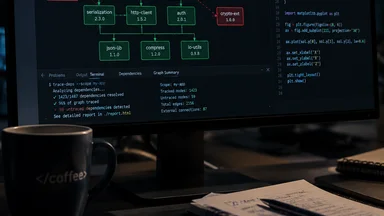
The original team's pipeline is built around PyMultiNest, a Bayesian retrieval code that explores a multidimensional parameter space of atmospheric properties — temperature, molecular abundances, cloud cover — and returns posterior distributions. The code is widely used in exoplanet spectroscopy, but its performance depends on the choice of priors and the likelihood function. In this case, the team used a Gaussian likelihood with a heuristic estimate of the noise, which critics say may underestimate the correlated noise introduced by the telluric correction.
The sceptics' preferred approach is a principal-component-based subtraction, borrowed from techniques used in high-contrast imaging. Instead of fitting a stellar model, they use a set of reference stars observed on the same night to construct a basis set of spectral variations. The target's spectrum is then projected onto this basis, and the residual is interpreted as the planetary signal. This method makes fewer assumptions about the stellar spectrum, but it requires a large library of reference stars — which the LBT team did not collect systematically. The Max Planck team used archival data from other instruments to supplement the reference set, introducing its own cross-calibration uncertainties.
Both groups agree on the raw data: the counts recorded by the LBT's detector. The divergence begins at the first step of data reduction. The original team applies a flat-field correction using dome flats; the sceptics use sky flats. The original team removes cosmic rays with a median filter; the sceptics use a Laplacian edge-detection algorithm. Each choice propagates through the pipeline, and the cumulative effect can shift the final spectrum by tens of parts per million — enough to make a methane feature appear or disappear.
Each pipeline has been validated on synthetic spectra generated by independent groups. The original team's pipeline successfully retrieved the input parameters for a set of 100 simulated observations, with recovery rates above 90% for water and carbon monoxide. The sceptics' pipeline performed similarly on the same synthetic data, but with a slightly higher false-positive rate for methane. Neither pipeline was tested on the full range of systematic errors present in real LBT data, and the validation simulations did not include the telluric variability that plagues ground-based observations. The craft differences remain unresolved because there is no ground truth — no independent measurement of these planets' atmospheres to compare against.
Broader Stakes for Exoplanet Spectroscopy
The outcome of this dispute matters beyond the 14 planets. Future space missions like ESA's Ariel (scheduled for launch in 2029) and NASA's proposed HabEx rely on similar techniques — observing exoplanet atmospheres in transmission or emission and retrieving molecular abundances. If the coating method works as claimed, it could cut observation time tenfold for ground-based surveys, allowing large statistical samples of exoplanet atmospheres to be built before the space missions launch. If the method is flawed, it could waste JWST follow-up time on targets whose atmospheric signals are not real.
In March 2026, the NASA Exoplanet Science Institute hosted a workshop dedicated to the dispute. Over three days, both teams presented their pipelines, shared code, and discussed error budgets. No consensus was reached, but the workshop participants agreed on a next step: a blind test. The design, led by a neutral third party at Caltech, involves generating a set of simulated LBT observations with known planetary signals injected at various strengths. Both teams will analyze the simulated data using their pipelines, and the results will be compared to the injected truth only after all submissions are locked.
The blind test is expected to be completed by late 2026. It will not settle every question — the simulations will inevitably miss some real-world systematics — but it will provide a controlled comparison of the two approaches. If one pipeline consistently recovers the injected signals while the other does not, the community will have a strong indication of which method is more reliable. If both pipelines perform similarly, the disagreement will shift to the realism of the simulations themselves.
The stakes extend to the broader culture of exoplanet science. The field has seen several high-profile retractions in recent years, including a claimed detection of phosphine on Venus that was later attributed to a calibration error. The LBT coating dispute is not a case of fraud — no one has alleged data fabrication — but it highlights how methodological choices can produce conflicting results from the same data. As the field moves toward larger surveys and automated pipelines, the need for standardized validation procedures becomes more urgent.
What a Blind Test Could Settle
The blind test is being designed by a committee that includes members from both sides of the debate, as well as outsiders from the exoplanet community. The simulated data will mimic the LBT observations: the same spectral resolution, the same noise properties, the same telluric variability. The injected planetary signals will vary in strength, from clearly detectable to marginally present, to test the pipelines' limits. The teams will be given the raw simulated counts and will apply their full reduction and retrieval pipelines. The results — the retrieved molecular abundances and their uncertainties — will be submitted to the Caltech committee, which will compare them to the injected truth.
One challenge is making the simulations realistic enough to capture the systematics that drive the disagreement. The telluric absorption, for example, must vary in a way that reflects real atmospheric conditions at the LBT site. The committee plans to use a year of weather data from the site to generate realistic water vapor columns. Similarly, the instrumental artifacts — fringing, nonlinearity, persistence — will be modeled based on laboratory measurements of the LBT's detector. The simulations will be blinded so that even the simulators do not know the injected signals for the final test set.
Both teams have agreed to participate, though with caveats. The original team has expressed concern that the simulations may not capture the full complexity of the real data, and that a negative result would not necessarily invalidate their method. The sceptics have said that if their pipeline fails to recover strong injected signals, they would reconsider their approach. The blind test is therefore not a winner-takes-all contest, but a diagnostic tool to identify where the pipelines differ and why.
The outcome could either validate the coating approach or retire it. If the original team's pipeline performs well across a range of signal strengths, the community may accept the 14 spectra as reliable, and the coating technique could be adopted by other observatories. If the sceptics' pipeline consistently outperforms, the original results may be reinterpreted as upper limits rather than detections. Either way, the blind test will provide a benchmark for future ground-based exoplanet spectroscopy, and it will likely be cited for years as a model for resolving methodological disputes.
Ongoing Debate
The LBT coating controversy is a reminder that frontier science is often messy. No one has alleged misconduct; the disagreement is about statistical choices, calibration strategies, and the interpretation of faint signals. The 14 exoplanet spectra may stand as a landmark result, or they may join the list of retracted claims that taught the field something about its own methods. Either way, the lesson for readers and practitioners is the same: the craft details — which model, which pipeline, which prior — matter as much as the telescope and the coating.
When a press release announces a new technique that multiplies the number of exoplanet spectra tenfold, the natural question is not “Is it true?” but “How was that spectrum extracted?” The answer, in this case, is a story of thin films, Bayesian retrievals, and a community still learning how to calibrate its instruments. The blind test will not end the debate, but it will sharpen the questions. And that, in the end, is how science moves forward — not by settling controversies, but by making them more precise.
For related discussions on how methodological choices shape scientific results, see our coverage of a reproducibility audit and a version mismatch that broke reanalysis pipelines.
Additional Context: Historical Parallels in Exoplanet Spectroscopy
This dispute is not the first time the exoplanet community has grappled with contradictory results from the same data. In the early 2010s, claims of water vapor in the atmosphere of HD 209458b were contested by different teams using different retrieval codes, until a community-wide effort established a consensus. More recently, the detection of carbon dioxide in the atmosphere of WASP-39b by JWST was initially questioned due to calibration issues, but was later confirmed by multiple independent analyses. These precedents show that methodological disputes often lead to improved practices, such as the use of open-source retrieval codes and standardized data formats.
The LBT coating controversy also echoes debates in other fields, such as the replication crisis in psychology, where different analysis pipelines applied to the same data produced different conclusions. In response, psychologists adopted pre-registration and multi-lab collaborations. Exoplanet science may benefit from similar reforms, such as requiring all reduction and retrieval code to be archived and version-controlled, and encouraging blind tests like the one planned for the LBT data.
Another parallel comes from the field of gravitational-wave astronomy, where the first detection of GW150914 was met with intense scrutiny of the data analysis pipeline. The LIGO team released their software and allowed independent groups to verify the signal, a process that ultimately strengthened confidence in the detection. The exoplanet community may look to that model as a template for resolving the LBT dispute.
These broader lessons underscore that the LBT controversy is not an isolated incident but part of a larger pattern in data-driven science. As telescopes become more powerful and datasets grow larger, the importance of transparent, reproducible analysis pipelines will only increase. The blind test for the LBT coating may serve as a case study for how to handle such disputes in the future, providing a template that other subfields can adapt.