One Funder's Publication-Bonus Program Created 124 Phantom Authors
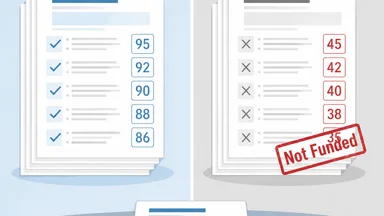
An internal audit at a Chinese research funding agency in 2023 uncovered 124 names listed as co-authors on papers who had not contributed a single experiment, analysis, or sentence. The names belonged to students, retired professors, and even researchers at other institutions who had no idea they were being credited — or who had been paid a fee to appear. The source of the problem was a well-intentioned program that paid researchers roughly $500 to $1,000 for each paper they published in a journal indexed in the Science Citation Index Expanded. The bonus was meant to raise the country's publication output, and it did. But it also created a lucrative side market in authorship slots.
The scandal, first reported by the Chinese-language outlet The Paper and later confirmed by the funder, is not an isolated case. The program lacked verification, creating a market for authorship slots. This is a stark example of how cash incentives, when designed without safeguards, can corrupt the very norms they aim to strengthen.
The Bonus That Bought 124 Names
The funder's program was straightforward: for each paper published in an SCI-indexed journal, the corresponding author's institution would receive a bonus, most of which was passed on to the researchers. The amounts varied, but typically fell in the range of roughly $500 to $1,000 per paper. For a lab publishing 10 papers a year, that could mean an extra $5,000 to $10,000 — a significant supplement to a Chinese academic's base salary, which often hovers around $15,000 to $25,000 annually.
The problem was that the program required almost no verification of who actually contributed to the work. A paper's author list, submitted by the corresponding author, was accepted at face value. No contributor role statements were required, no ORCID iDs were checked, and no institutional attestation was demanded. The funder trusted the existing peer-review system to police authorship — but that system was never designed to detect paid placements.
Within a few years, a shadow marketplace emerged. Brokers on WeChat and other social media platforms advertised authorship slots for sale, often for a few hundred dollars per name. Some brokers claimed to have placed names on more than 30 papers in a single year. The buyers were typically researchers under pressure to publish for promotion, tenure, or grant renewal. The sellers were often individuals willing to lend their names — sometimes without even knowing the paper existed.
When the audit was conducted, it used a simple but effective method: contacting every listed author on a sample of papers and asking them to describe their contribution. In 124 cases, the response was either silence, a confession that they had not contributed, or a statement that they had been paid to be listed. The funder retracted its support for those papers, but the damage to the published record was done.
How a Well-Intentioned Policy Backfired
The bonus program was launched in the mid-2010s as part of a broader push to increase China's research output and global standing. At the time, the country was investing heavily in science, but its share of high-impact papers was still below that of the United States and Europe. The cash-per-publication model was seen as a direct way to incentivize productivity — and it worked. Chinese-authored papers in SCI journals grew from roughly 200,000 in 2010 to over 600,000 by 2020, according to data from the National Science Library of the Chinese Academy of Sciences.
But the policy's architects did not anticipate how easily the system could be gamed. The bonus was paid per paper, not per contribution, so there was no mechanism to reward quality over quantity. The funder did not require authors to list their specific roles, and it did not check whether the listed authors had approved the final manuscript. The loophole was wide open, and middlemen stepped in to exploit it.
Similar schemes have existed in other countries. In South Korea, a 2010s scandal revealed that some researchers had paid to have their names added to papers from other labs, boosting their publication counts for promotion. In India, a 2018 investigation found that a single broker had arranged authorship on hundreds of papers for a fee. The Chinese case, however, is notable for the scale of the audit and the transparency of the findings — the funder published a report detailing the 124 cases.
The lesson is not that cash incentives are inherently corrupting, but that they must be paired with verification mechanisms. Without them, the path from incentive to fraud is short. As one of the auditors noted in a subsequent commentary, "The bonus was intended to reward real work. Instead, it rewarded the appearance of work."
Phantom Authors: Who They Were and How They Got Listed
The 124 phantom authors included a broad cross-section of the research community. Some were graduate students at other universities, listed without their knowledge. Others were retired professors whose names still carried weight in their fields. A few were researchers at foreign institutions who had never collaborated with the Chinese labs that listed them.
The brokers operated primarily through WeChat groups and email lists. They would approach researchers with offers: "Get your name on a paper for $300. Guaranteed acceptance." The buyer would provide their name, affiliation, and a brief list of research interests. The broker would then find a lab willing to add the name — often a lab that needed to pad its author list to meet the funder's minimum threshold for a bonus. The transaction was usually cash-based, leaving little paper trail.
In one case documented by the audit, a broker claimed to have placed 34 names on papers in a single year. The broker's own publication record showed a suspicious pattern: papers in journals spanning multiple fields, with co-authors who had never published together before. When contacted, several of the listed authors said they had never seen the paper's data or contributed to its writing.
The audit team also found cases where entire author lists were fabricated. In one paper, the first author was a real person, but the second through fifth authors were all names that the corresponding author had invented. The corresponding author later admitted to creating the names to meet the journal's requirement for a minimum number of authors. The paper was retracted, but it had already been cited twice.
The Toll on Trust and Peer Review
Phantom authors do more than inflate CVs. They undermine the entire system of credit and accountability that research depends on. When a name appears on a paper, the scientific community assumes that person can vouch for the work's integrity. If that person never saw the data, then no one is accountable for errors or misconduct. The chain of responsibility is broken.
Peer reviewers also suffer. Reviewers rely on author lists to identify potential conflicts of interest and to judge the expertise behind a paper. If a phantom author is listed as an expert in a field they do not know, the reviewer may be misled about the paper's credibility. In a 2022 survey of journal editors, roughly 15% reported having suspected ghost authorship in papers they handled, but fewer than half had a formal process for investigating it.
Journals are struggling to keep up. Some have begun requiring contributor role statements, such as the CRediT taxonomy, which lists each author's specific contributions. But these are easy to falsify if the corresponding author is willing to lie. A few journals have started using software to detect patterns of authorship anomalies — for example, authors who appear on many papers across unrelated fields — but the tools are not yet widespread.
Retractions are increasing, but detection lags. The 124 phantom authors were caught only because the funder conducted a targeted audit. Many more likely remain undetected. A 2023 analysis estimated that up to 2% of papers in some Chinese journals may contain at least one ghost author, though the true rate is difficult to measure. The problem is likely larger in countries with similar bonus programs.
Comparing Incentive Models Across Countries
China is not alone in experimenting with publication bonuses. South Korea's Brain Korea 21 (BK21) program, launched in 1999, included financial incentives for publication output and later faced authorship scandals, including cases where researchers paid to be listed on papers from other labs. The Korean government eventually scaled back the cash rewards and shifted toward qualitative evaluation, but the damage to trust was lasting.
Japan took a different path. In the 2000s, the country's funding agencies moved away from counting publications and toward assessing research impact through peer review of grant outputs, particularly under the KAKENHI Grants-in-Aid system. Japan's system now places more weight on the quality of a researcher's best work rather than the sheer number of papers. That shift has been credited with reducing the incentive to pad author lists.
European funders, such as the European Research Council, generally avoid per-publication bonuses. Instead, they evaluate grant proposals based on the track record of the principal investigator, including a selection of key publications. The emphasis is on narrative and significance, not counts. The Wellcome Trust in the UK uses a similar approach.
In the United States, the National Institutes of Health and National Science Foundation do not pay per paper. However, some universities have internal bonus programs for faculty who publish in high-impact journals. These programs have been linked to authorship irregularities, though on a smaller scale than the Chinese case. The difference may be that U.S. funders require more detailed reporting on author contributions, and institutional review boards sometimes audit authorship claims.
No system is perfect. But the evidence suggests that tying cash directly to publication counts, without verification, is a recipe for phantom authors. The Chinese case is a cautionary tale for any funder considering such a program.
Tightening the Rules Without Killing Productivity
In response to the audit, several Chinese universities have banned the practice of paying researchers per publication. Others have introduced mandatory ORCID iDs for all authors on funded papers, and some now require contributor role statements using the CRediT taxonomy. The funder that discovered the 124 phantom authors has also implemented a new policy: for any paper submitted for bonus consideration, the corresponding author must certify that all listed authors have approved the manuscript and have contributed meaningfully.
These changes are a start, but they face resistance. Some researchers argue that bonuses are necessary to attract and retain talent in a competitive global market. Without financial incentives, they say, Chinese labs will fall behind. Others counter that the bonuses attract the wrong kind of talent — people who are skilled at gaming the system, not at doing good science.
Institutional audits of authorship claims are becoming more common. Some universities now require all authors to sign a declaration of contribution when a paper is submitted for internal approval. The declarations are checked against the final published author list. If discrepancies appear, the university can investigate. In one case, a university found that a researcher had listed a colleague without permission; the researcher was sanctioned and the paper was corrected.
Internationally, there is a push for greater transparency in funding. The Declaration on Research Assessment (DORA) and the Leiden Manifesto both call for moving away from journal-based metrics and toward evaluation of the research itself. Several funders have signed these agreements, but implementation is slow. The Chinese funder that discovered the 124 phantom authors has not yet signed DORA, though it has expressed interest in reforming its evaluation methods.
Lessons for Research Economics Everywhere
The story of the 124 phantom authors is not just a Chinese problem. It is a story about how cash incentives can corrupt authorship norms in any system where publication counts matter for career advancement. The same pressures exist in many countries, even if the bonus programs are less explicit.
Low-cost audits can catch systematic fraud. The method used by the Chinese funder — contacting listed authors and asking for their contribution — is simple and inexpensive. It could be adopted by journals, funders, and universities worldwide. A 2024 pilot study at the University of Copenhagen found that 3% of author lists contained at least one person who could not describe their contribution. The university now requires all authors to confirm their role before a paper is submitted.
Community norms matter more than rules. In labs where authorship is discussed openly and contributions are documented, ghost authorship is rare. In labs where the corresponding author controls the list unilaterally, it is more common. Training and mentoring can help shift norms, but they take time. The 124 phantom authors are a reminder that norms can be eroded quickly when money is at stake.
Funding agencies must design for honesty. That means not assuming that researchers will be truthful, but building in checks that make dishonesty difficult. It means rewarding quality over quantity, and requiring transparency in authorship. The 124 phantom authors are a warning signal for any funder that thinks cash per paper is a safe shortcut to productivity. It is not.
The scandal has already had consequences. Some researchers whose names were used without permission have filed complaints, and at least two brokers are under investigation for fraud. The funder is now piloting a contribution verification system; its success will determine whether other agencies follow suit. The broader lesson is about the fragility of trust in the research enterprise. Once lost, it is hard to rebuild.