How One 1960s NIH Grant Shifted Mouse Genetics
In the early 1960s, biomedical research faced a quiet but persistent crisis. Researchers studying cancer, immunology, and genetics relied on mice, but the animals they used were a genetic patchwork. A scientist at the National Cancer Institute might breed a colony from a few pairs obtained from a local pet supplier, while a colleague at a university in another state maintained a separate stock with a completely different genetic background. When the two labs tried to replicate each other's experiments, results often diverged. The culprit was not sloppy technique but uncontrolled genetic variation. Without a standardized mouse strain, the foundation of experimental biology was shaky.
This problem did not go unnoticed. Geneticists had long argued that inbred strains—mice made genetically uniform through many generations of sibling mating—would eliminate one major source of variability. But producing such strains was slow, expensive, and unglamorous. It required decades of careful breeding, meticulous record-keeping, and large colonies. No single institution had the resources or the mandate to take on the task. The result was a fragmented landscape where every lab was a world unto itself.
Then, in 1965, the National Institutes of Health made a bet that would change the course of mouse genetics. It awarded a single, substantial grant to the Jackson Laboratory in Bar Harbor, Maine, to systematically develop and distribute inbred mouse lines. The decision was not universally popular. Some scientists saw it as a waste of money on what they called "just mouse breeding." But the grant's defenders argued that standardization would pay for itself many times over by making experiments reproducible across labs. That logic, rooted in infrastructure thinking rather than flashy discovery, proved remarkably prescient.
This article traces the story of that grant—how it came about, what it built, and what it cost. It explores the science policy gamble behind the funding, the legacy of the inbred strains that emerged, and the lessons for modern research funding. The mouse story is not just a historical curiosity; it is a parable about the long-term value of investing in the tools that make science possible.
The Puzzle of the Inbred Mouse
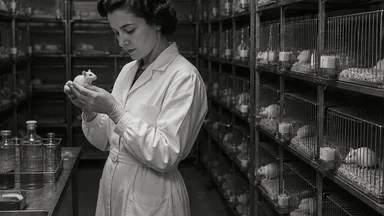
In the 1950s and early 1960s, the standard laboratory mouse was anything but standard. Most researchers obtained animals from local breeders or maintained small colonies derived from random-bred stocks. These mice carried a rich mix of genetic variants, much like a population of wild mice. When a scientist treated a group with a carcinogen or a drug, the response varied widely from animal to animal. Some developed tumors quickly, others slowly, and some not at all. The noise was so high that detecting a real effect required large sample sizes, and even then, results often failed to replicate in another lab using a different stock.
The problem was well known. In 1960, the geneticist George Snell at Jackson Laboratory noted that "the use of genetically undefined mice has been a major source of confusion in experimental biology." His colleague Margaret Green, who would later lead the grant-funded effort, echoed this view. She argued that without inbred strains, researchers were essentially trying to measure the height of a wave on a choppy sea. The variability obscured the signal.
Inbred strains—created by mating siblings for 20 or more generations—offer a solution. After enough generations, the mice become homozygous at nearly every gene, meaning each animal is genetically identical to every other. This uniformity dramatically reduces experimental noise. But creating such strains is a slog. Each generation takes about three months, and the colony must be large enough to avoid accidental inbreeding depression. The Jackson Laboratory had started some inbred lines in the 1920s and 1930s, including C57BL/6 and BALB/c, but these were maintained on a shoestring budget. They were not widely distributed, and many labs continued to use random-bred animals.
The result was a quiet crisis in reproducibility. A 1963 survey of cancer research found that less than 20% of studies using mice specified the strain. Among those that did, the strains varied so much that comparisons were difficult. The field needed a coordinated effort to produce, characterize, and distribute inbred mice. But who would pay for it?
A Grant Application That Changed Everything
The answer came from the National Institutes of Health. In 1965, the NIH's Division of Research Grants approved a proposal from the Jackson Laboratory to establish a "Genetic Resource for Inbred Strains." The principal investigator was Margaret Green, a geneticist who had spent years studying mouse coat color and linkage maps. She was a meticulous scientist with a clear vision: create a centralized repository of inbred strains, characterize their genetics and phenotypes, and distribute them to any qualified researcher at minimal cost.
The grant was large for its time. The annual budget was roughly US$ 200,000 to 300,000—equivalent to about US$ 1.5 to 2.5 million today when adjusted for inflation. It covered the expansion of mouse colonies, the hiring of additional animal care staff, and the development of a systematic record-keeping system. The Jackson Lab committed to maintaining at least 20 inbred strains, each with a documented pedigree going back to the original founder pairs.
Margaret Green was an unusual choice to lead such a project. She was a woman in a field dominated by men, and she had spent much of her career in the shadow of her husband, Earl Green, who was director of the Jackson Lab. But she had a deep understanding of mouse genetics and a pragmatic approach to colony management. She insisted on rigorous quality control: each strain was periodically tested for genetic purity using biochemical markers and, later, skin grafting. If a strain showed contamination, it was discarded and replaced from frozen embryos.
The grant ran for five years, with the possibility of renewal. By 1970, the Jackson Lab had distributed over 100,000 mice to researchers around the world. The strains C57BL/6 and BALB/c had become the workhorses of cancer research. The investment was already paying off in the form of more reproducible experiments and faster progress in understanding tumor biology.
The Science Policy Gamble Behind the Funding
The decision to fund the Jackson Lab grant was not a foregone conclusion. The NIH study section that reviewed the proposal debated its merits vigorously. Some reviewers argued that the money would be better spent on hypothesis-driven research—studying specific diseases or mechanisms—rather than on what they saw as a service project. "Why should the NIH pay for mouse breeding?" one reviewer reportedly asked. "That's what the animal facilities are for."
Advocates of the grant countered with a long-term infrastructure logic. They pointed out that the cost of generating inbred strains was a one-time investment that would reduce the cost of every subsequent experiment. A researcher using an inbred strain could use fewer animals and get more reliable results. Over time, the savings in animal costs, researcher time, and failed replications would dwarf the initial outlay. This argument echoed earlier debates about biological repositories, such as the American Type Culture Collection, which had been established in 1925 to preserve microbial strains.
The study section ultimately approved the grant, but with a condition: the Jackson Lab must demonstrate demand by distributing mice to at least 50 laboratories within the first two years. That target was met within 18 months. The gamble had paid off, but it could have gone the other way. If demand had been tepid, the grant would have been seen as a boondoggle, and future infrastructure projects might have been harder to fund.
The decision also reflected a broader shift in NIH thinking. In the early 1960s, the agency had begun to recognize that basic research tools—from cell lines to databases—were essential for scientific progress. The mouse grant was part of a wave of investments in shared resources, including primate centers, gene banks, and clinical trial networks. These infrastructure bets were less glamorous than discovering a new gene or curing a disease, but they created the conditions for those discoveries to happen.
The Strains That Built Modern Biomedicine
The inbred strains developed under the grant became the foundation of modern mouse genetics. C57BL/6, often called "Black 6," is now the most widely used mouse strain in research. It was the first mammal to have its genome sequenced, in 2002, and it serves as the reference for nearly all mouse studies. BALB/c, a white mouse with a docile temperament, became the standard for immunology research, particularly for studies of antibody production and tumor transplantation.
These strains enabled a cascade of discoveries. In the 1970s, researchers used inbred mice to identify the major histocompatibility complex, the set of genes that governs immune recognition. In the 1980s, the development of knockout mice—animals with specific genes disabled—relied on the genetic uniformity of inbred strains to ensure that the effects of a mutation were not confounded by background variation. Today, over 90% of mouse studies use inbred strains, according to some estimates. The knockouts, transgenics, and CRISPR-edited mice that dominate modern biomedicine all stand on the shoulders of those early inbred lines.
The impact extends beyond basic research. Pharmaceutical companies use inbred mice to test drug toxicity and efficacy. The predictability of the genetic background reduces the number of animals needed and increases the reliability of safety data. In cancer research, patient-derived xenografts—tumors from human patients grown in mice—are typically implanted into inbred strains to minimize variability. Without the infrastructure created by the 1965 grant, many of these applications would be far less effective.
But the story is not entirely triumphant. Inbred strains have limitations. Because they are genetically uniform, they may not capture the full range of human genetic diversity. Some researchers argue that the field has become too reliant on a handful of strains, potentially missing effects that would appear in outbred populations. Efforts are now underway to create "diversity outbred" mice and other resources that reintroduce genetic variation. Yet even these newer tools depend on the foundational work of the 1960s, because they use inbred strains as building blocks.
Lessons for Modern Research Funding
The success of the mouse grant offers lessons for today's funding agencies. Infrastructure grants—for biorepositories, data archives, or animal facilities—are often undervalued compared to discovery projects. Peer review tends to favor novel hypotheses over boring but essential maintenance. A grant to sequence a genome or test a drug seems exciting; a grant to breed mice or catalog cell lines seems pedestrian. Yet the return on infrastructure investment can be enormous, precisely because it enables so many downstream projects.
Current NIH funding cycles, which typically last three to five years, discourage the kind of decade-long commitment that the mouse project required. The Jackson Lab grant was renewed for nearly 20 years, allowing the colony to grow and the strains to become established. Today, agencies are experimenting with longer grant periods for resource centers, but political and budgetary pressures often cut these short. The result is a tendency to underinvest in the shared tools that make research efficient.
Private foundations sometimes fill the gap. The Howard Hughes Medical Institute, the Wellcome Trust, and the Gates Foundation have all funded large-scale infrastructure projects, from gene knockout consortia to disease-specific mouse repositories. But these efforts are often piecemeal. A coordinated national strategy for model organism resources, like the one that emerged in the 1960s, is rare.
The mouse story also highlights the importance of standardization for reproducibility. The current crisis in biomedical reproducibility—where many published results cannot be replicated—has roots in the same kind of variability that plagued the 1960s. Researchers today often use cell lines or reagents that are poorly characterized, leading to noise and false positives. Investing in standardized biological resources, as the NIH did for mice, could help address this problem. But it requires a willingness to fund things that are not immediately glamorous.
What the Grant Cost and What It Returned
Estimating the precise return on investment from the 1965 grant is difficult, but some rough calculations are instructive. The total cost over five years was roughly US$ 1.25 million (about US$ 10 million in today's dollars). Adjusted for inflation, the Jackson Lab's subsequent renewals brought the total to perhaps US$ 30–40 million over two decades. That is a modest sum compared to the billions spent annually on biomedical research.
What did that money buy? One analysis suggests that roughly 70% of mouse studies now rely on inbred strains, either directly or indirectly. If each study uses an average of 50 mice, and inbred strains save 20% of the cost by reducing sample size and replication failures, the savings quickly add up. A conservative estimate puts the cumulative savings in the billions of dollars. More importantly, the strains accelerated the pace of discovery. The development of knockout mice, which won the Nobel Prize in 2007 for Mario Capecchi, Martin Evans, and Oliver Smithies, would have been far harder without uniform genetic backgrounds.
The grant also had indirect effects on pharmaceutical development. Companies like Merck, Pfizer, and Genentech routinely use inbred mice to test drug candidates. The predictability of these strains allows them to detect toxic effects early, saving millions in failed clinical trials. Some industry analysts estimate that standardized mouse models have shaved years off drug development timelines for certain classes of drugs.
But not all returns are quantifiable. The grant created a culture of sharing and collaboration around mouse resources. The Jackson Lab's policy of distributing mice at cost, rather than for profit, ensured that strains spread quickly through the research community. This open-access model, rare at the time, became a template for later biological repositories, such as the Mutant Mouse Resource and Research Centers. The social infrastructure of trust and cooperation that the grant fostered may be its most enduring legacy.
A Decision That Keeps Paying Out
Today, the Jackson Laboratory is the world's largest supplier of research mice, shipping millions of animals each year to laboratories in over 50 countries. The inbred strains developed under the 1965 grant remain the most popular. C57BL/6 alone accounts for roughly half of all mouse orders. The lab also maintains a cryopreservation facility that stores embryos and sperm from hundreds of strains, ensuring that valuable genetic resources survive natural disasters or funding cuts.
New technologies depend on these old strains. CRISPR gene editing, which allows precise modification of the mouse genome, works best on a defined genetic background. Researchers routinely edit C57BL/6 embryos to create models of human diseases, from Alzheimer's to diabetes. The ability to compare results across labs depends on the fact that everyone is using the same strain. Without the standardization achieved in the 1960s, the CRISPR revolution would be far messier.
The grant also serves as a case study in science policy. It is often cited by advocates of long-term infrastructure funding, who argue that agencies should set aside a portion of their budgets for "platform" projects that enable diverse research. The National Science Foundation's recent investments in data repositories and the NIH's Human Microbiome Project are modern parallels. But the mouse story is a reminder that such bets require patience. The payoff may not come for a decade or more, and the benefits are diffuse, making them hard to defend in annual budget hearings.
As of 2025, the Jackson Lab continues to expand its offerings, including "humanized" mice with immune systems derived from human stem cells. These animals are used to test cancer immunotherapies and infectious disease vaccines. The genetic infrastructure built in the 1960s makes these advances possible. The decision to fund mouse breeding, once controversial, now looks like one of the smartest investments the NIH ever made. It shows that sometimes the most powerful scientific discoveries come not from a single experiment, but from the quiet work of building the tools that make experiments reliable.