What If Your Trash Can Already Knows When to Take Itself Out?
Ever caught yourself stepping on a full trash bag at midnight? Or holding your breath while wrestling a swollen kitchen bin? You’re not alone. The truth is, we’ve all been there—stuck in that messy, smelly cycle that feels too small to fix, yet drains our energy daily. But what if the solution wasn’t more effort, but less? Imagine a home where even the trash works for you, not against you. That’s not sci-fi. It’s happening now—and it’s simpler than you think.
The Hidden Stress of a Simple Task
Let’s be honest—no one wakes up dreaming about taking out the trash. It’s not on our vision boards or daily affirmations. But here’s what we don’t talk about: that little chore carries a surprisingly heavy emotional load. It’s not just the physical act of tying a bag and lugging it to the curb. It’s the mental clutter that comes with it. The constant background question: Is it full yet? Did someone forget? Should I check? That low-level anxiety builds up, especially when life is already full—kids needing help with homework, dinner simmering, a work email pinging in the background.
Think about the last time you opened the cabinet under the sink and were hit with that sour, lingering smell. Or when you stepped barefoot into something sticky near the bin and had to stop everything to clean it. These aren’t just messes—they’re interruptions. They break your flow, steal your calm, and make you feel like you’re always playing catch-up. For parents, it’s another invisible load. For roommates or partners, it can spark unnecessary tension. “Wasn’t it your turn?” becomes a familiar, frustrating phrase. And if you live with pets, well—you know the chaos a curious nose or paw can create when the lid isn’t sealed tight.
The trash can, as humble as it is, becomes a silent battleground. It’s not just a container; it’s a symbol of all the small things we manage without recognition. And when those small things go wrong, they don’t just create mess—they chip away at our sense of control. But what if we could offload even this tiny burden? What if we could stop managing the bin and start trusting it?
How Smart Bins Actually Work—No Tech Jargon Needed
Now, I know what you might be thinking: “Great, another gadget that needs charging, updating, and a PhD to set up.” But smart trash cans aren’t like that. They’re designed for real life, not tech labs. Think of them less like robots and more like thoughtful helpers—quiet, reliable, and always paying attention.
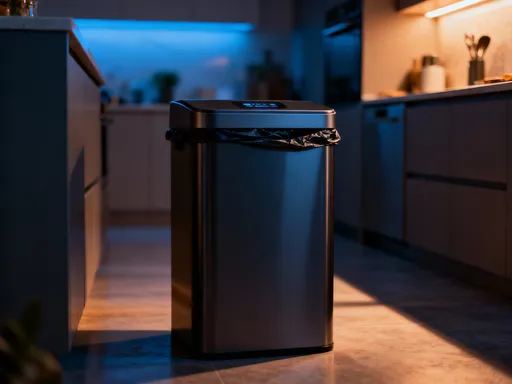
Here’s how they work, in plain terms: most smart bins use simple sensors to detect when the bag is getting full. Some use weight, some use motion, and others use infrared to measure space. When the bin senses it’s nearing capacity, it can do a few helpful things. It might send a gentle notification to your phone—like a quiet text that says, “Hey, I’m about full. Just a heads-up.” No stress, no surprise spills. Some models even seal the bag automatically when you close the lid, locking in odors before they escape. Imagine never having to hold your breath while tying a knot in a smelly bag again.
And yes, many of them open hands-free. Just wave your hand, and the lid glides open. No touching, no germs, no awkward dance with a full bag in one hand and the lid in the other. Some even connect to your smart home system. You can say, “Hey, is the trash full?” and your speaker will tell you. Or set it to remind you the night before collection day. It’s like having a tiny, invisible assistant who just wants to keep your kitchen clean.
The best part? You don’t need to be tech-savvy to use one. Most are plug-and-play. You plug it in, set your preferences—like how full it should get before alerting you—and let it learn your rhythm. It adapts to your household, not the other way around. No coding, no complex apps, no frustration. Just quiet, consistent help where you need it most.
Real-Life Wins: Less Mess, Fewer Arguments, More Time
Let’s paint a picture of what changes when your trash can starts doing its job a little smarter. Meet Sarah, a mom of two, working from home three days a week. Her kitchen used to be a hotspot for last-minute trash crises. Between lunch prep, snack requests, and Zoom calls, she’d often forget to check the bin. Then—drip. A coffee pod leaks. Then another. Soon, the whole bag is damp, and she’s scrubbing the cabinet at 8 p.m., frustrated and exhausted.
Now? Her smart bin sends a notification at 4 p.m. when it’s 80% full. She ties the bag, swaps it out during her afternoon stretch break, and gets back to her laptop—calm, collected, and in control. No mess. No panic. Just a smooth handoff.
Or take James and Lisa, sharing a small apartment. They used to have a silent standoff every week—neither wanted to be the one to take it out, and neither wanted to admit they’d forgotten. Now, the bin sends a shared alert. No blame, no tension. Just a simple nudge that keeps them both on the same page.
And for older adults living independently, these bins can be a quiet source of dignity. No more struggling with heavy bags or forgetting collection days. No more worrying about odors or pests. Just a system that supports their independence with grace.
The real win isn’t just convenience—it’s the space it creates. Mental space. Emotional space. Time. When you’re not constantly monitoring the trash, you’re free to focus on what matters: helping your child with a project, finishing a book, or just sitting down with a cup of tea without interruption. That’s the kind of freedom small tech can bring.
Not Just Convenience—It’s About Dignity and Calm
We often talk about smart home tech in terms of efficiency or novelty. But for many of us, especially women managing households, the real value is deeper. It’s about peace. It’s about walking into a clean kitchen and feeling a quiet sense of order, not dread. When the little things work smoothly, the big things feel more manageable.
A smart bin isn’t about luxury. It’s about respect—for your time, your energy, your well-being. Every time you avoid a mess, dodge a chore at the worst moment, or prevent a small argument, you’re reclaiming a piece of your calm. And over time, those pieces add up.
Think about how much mental energy we spend on micro-decisions: Is it full? Should I take it now? Can I wait? Did I forget the recycling? That’s decision fatigue, and it’s real. When technology quietly handles those choices, it’s not laziness—it’s self-care. It’s choosing to protect your focus for things that truly need it, like parenting, creating, or simply resting.
And let’s not underestimate the emotional weight of a clean, well-kept home. It’s not about perfection. It’s about feeling safe, grounded, and in control. For someone managing anxiety, postpartum recovery, or the challenges of aging, a home that supports them—instead of fighting them—is priceless. A smart bin might seem like a small upgrade, but it’s part of a larger shift: designing a life that works with you, not against you.
Making It Work for Your Home—Simple Setup, Real Results
Now, you might be wondering: “Is this going to take over my kitchen? Will it clash with my decor? Do I need to rewire my house?” The answer is no, no, and no. Most smart bins are designed to blend in, not stand out. They come in sleek finishes—matte black, stainless steel, soft white—that look at home in any kitchen. They take up the same space as a regular bin, and many even have compact footprints for smaller homes.
Setting one up is easier than you’d think. Most just need an outlet nearby. You plug it in, download a simple app (if you want notifications), and choose your settings. Want it to alert you at 75% full? Done. Prefer a hands-free open but no notifications? Easy. You can even sync it with your Alexa or Google Home. “Hey Google, open the trash can,” and the lid rises—perfect when your hands are full of groceries or messy from cooking.
Maintenance is minimal. The sensors are self-cleaning in most models, and the bins are made with odor-resistant materials. Some even have UV-C light to sanitize the inside. You still change the bag the same way—no special liners needed for most. And because the bag is sealed automatically, you’re less likely to touch the outside, which means fewer germs on your hands.
Start small. Try one in the kitchen. See how it feels to get that gentle reminder instead of a surprise mess. Notice the difference when you don’t have to hold your breath while tying a bag. Let it earn its place in your home. And if you love it? That’s when you consider adding one to the bathroom or home office.
Beyond the Kitchen—Smart Bins in Bathrooms, Offices, and More
Here’s a thought: your kitchen isn’t the only place that could use a little trash help. What about the bathroom? That small bin fills up fast—tissues, cotton pads, empty toothpaste tubes. And because it’s in a humid space, smells can linger. A smart bin here can seal waste instantly, keeping the air fresh. No more opening the lid and regretting it.
Or your home office. Paper scraps, sticky notes, coffee stirrers—it adds up. A compact smart bin can sit under your desk, open hands-free when you wave, and alert you when it’s time to empty. No more forgetting to take it out before your next video call. No more clutter building up in silence.
Even the entryway can benefit. Mail piles up, shopping receipts, old gloves. A small smart bin there can help manage the daily influx of little things that otherwise end up on the floor or in a drawer. It’s not about having a bin in every room—it’s about choosing the spots where small messes cause the most stress.
And for families with kids, a hands-free bin in the playroom or laundry area can be a game-changer. No more teaching little hands to lift a heavy lid. Just wave, toss, and go. It’s safer, cleaner, and easier on everyone.
The Bigger Picture: Small Tech, Big Impact on Daily Living
At the end of the day, a smart trash can isn’t going to change the world. But it might just change your day. And when your days feel lighter, more peaceful, more under control, that adds up to a better life.
This isn’t about chasing the latest gadget trend. It’s about being intentional with the tools we bring into our homes. It’s about choosing technology that serves us, not the other way around. When a simple bin can reduce stress, prevent arguments, and save us from one more midnight cleanup, it’s not a luxury—it’s a quiet act of care.
Think about all the things you manage every day. The meals, the schedules, the emotional labor, the invisible tasks that keep your home running. You deserve support. You deserve tools that make your life easier, not harder. And sometimes, that support comes in the most unexpected form—a trash can that knows when it’s full.
So the next time you’re standing in your kitchen, eyeing that overstuffed bag, ask yourself: Why am I still doing this the hard way? You’ve already done enough. Let the bin help. Let technology handle the small stuff, so you can focus on what really matters—your family, your peace, your joy. Because a calmer home isn’t built all at once. It’s built one small, smart choice at a time.