After Testing 12 Reminder Apps, This One Finally Kept My Friendships Alive
You know that sinking feeling when you miss a close friend’s birthday—again? Or realize you haven’t texted someone you care about in months? I’ve been there. Despite meaning well, life gets busy, and important connections slip through the cracks. But what if a simple tech tool could quietly help you stay present in your friends’ lives? This is exactly what I discovered after years of failed sticky notes, calendar alerts, and good intentions. It wasn’t about being forgetful—it was about being overwhelmed. And the solution wasn’t more willpower. It was smarter support.
The Slow Drift No One Talks About
Friendship, especially the kind that feels like family, often gets treated as if it’s self-sustaining. We assume that because we’ve shared laughter, tears, and years together, the bond will simply endure—no maintenance required. But the truth is, even the strongest friendships need tending. I started noticing how easily I’d lose touch with people I deeply cared about, not because I stopped loving them, but because I stopped showing up in small, meaningful ways. A missed birthday. A forgotten anniversary of when we first met. A quiet week when someone was going through a hard time, and I didn’t reach out. These weren’t huge betrayals, but they added up.
One day, I called an old friend after a long silence, and she said, “I wasn’t sure you still thought about me.” Her voice wasn’t angry—just soft, a little sad. That hit me hard. I had thought about her, of course. But I hadn’t shown it. And in the absence of action, care becomes invisible. That’s when I realized: memory is emotional labor. Remembering someone’s favorite flower, the name of their childhood dog, or the day they got their first job isn’t just trivia—it’s proof that they matter to you. When we stop remembering, we send a quiet message: “You’re not a priority.” I didn’t want that to be true, but I also didn’t want to carry the weight of remembering everything on my own.
Life as a woman in her 30s, 40s, or beyond is full of roles—mother, partner, employee, caregiver, friend, daughter. We’re expected to remember school pickups, doctor appointments, grocery lists, and work deadlines. Why should remembering our friendships fall to the bottom of that list? It shouldn’t. But without a system, it often does. I began to see that the slow drift wasn’t a failure of love—it was a failure of support. And that’s when I decided to look for help, not in another self-help book, but in technology.
Why Good Intentions Aren’t Enough
We’ve all said it: “I really need to call so-and-so.” “I should send a note.” “I’ll plan a lunch soon.” And yet, days turn into weeks, weeks into months, and the call never happens. It’s not that we don’t care. It’s that caring doesn’t automatically lead to action. Our brains are incredible, but they’re not designed to track emotional timelines. We remember what’s urgent—laundry, deadlines, kids’ school forms—but not necessarily what’s meaningful. And when we rely on memory alone, the meaningful moments are the first to slip.
I tried everything to stay on top of it. I wrote names on sticky notes and stuck them to my fridge. I added birthdays to my phone calendar with alarms set a week in advance. But the sticky notes yellowed and fell off. The calendar alerts? I’d see them, feel a pang of guilt, and then silence. “Oh, it’s Lisa’s birthday. I’ll text her later.” But later never came. The problem wasn’t the reminder—it was the gap between the reminder and the action. The alert said “Lisa’s birthday,” but it didn’t say, “Lisa loves sunflowers—send a photo of one with a sweet note.” It didn’t pull up our last conversation or suggest a voice message. It just beeped, and I dismissed it like any other notification.
That’s when I realized: I didn’t need another alert. I needed a nudge that felt personal, that pulled me into the emotion of the moment. I wanted to remember Lisa not because a machine told me to, but because I was reminded of why she mattered. I didn’t need efficiency—I needed warmth. And most tools weren’t built for that. They were built for productivity, not connection. So I decided to test the ones that claimed to do more than just remind. I wanted something that could help me show up—not perfectly, but authentically.
How I Tested 12 Different Reminder Tools
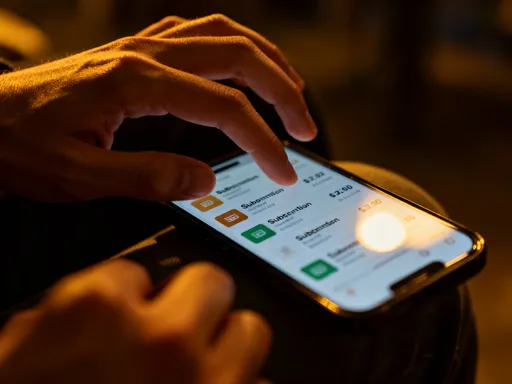
I gave myself six months to try different apps, each promising to help me stay connected. I started with the obvious: my phone’s built-in calendar. It’s reliable, but cold. I added birthdays and anniversaries, even set recurring events for “check-in with Mom” or “call Jen.” But after a few weeks, I started ignoring the alerts. They felt like chores. “Call Jen” on the screen sounded like a task, not a moment of love. I needed something that didn’t just list what to do, but reminded me *why* I wanted to do it.
Next, I tried social media birthday reminders. Facebook used to be great for this, but now it’s cluttered, and the alerts come too late—often on the day itself, when I’m already behind. Plus, it only tracks birthdays, not other meaningful dates like the anniversary of a friend’s divorce, or the day her mom passed. And it certainly doesn’t suggest what to say. Then I tested habit-tracking apps, thinking I could treat friendship like a daily habit. But “text a friend” as a checkbox felt hollow. It turned something heartfelt into a to-do item. I didn’t want to “complete” a friendship task. I wanted to reconnect.
I also tried a few niche apps designed for memory and connection. One sent me a weekly list of upcoming events. Another offered prompts like “Send a thank-you note.” But they were either too generic or too complicated. Some required me to input too much data upfront. Others sent too many notifications, until I turned them all off. I scored each app on three things: simplicity, emotional relevance, and actionability. Could I set it up quickly? Did it help me feel something, not just do something? And did it make it easy to reach out—like with a pre-filled message or photo suggestion?
Most apps failed at least one of these. But one stood out. It didn’t have the flashiest design or the most features. In fact, it was surprisingly simple. But it did something the others didn’t: it remembered like a friend, not a robot.
The One App That Actually Changed Things
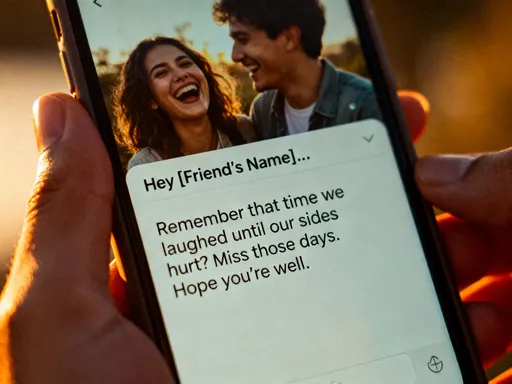
The app that worked—let’s call it MemoryMate—didn’t just tell me when something was coming up. It prepared me for it. A week before a friend’s birthday, it would gently surface a photo from last year’s celebration. “Remember this?” it would say. Or it would remind me of a conversation we had: “You both loved that book—maybe mention it?” It didn’t just say “It’s Sarah’s birthday.” It said, “Sarah’s birthday is coming up. She loved your last voice note. Send another?” And there was a button right there to record one.
That small difference changed everything. Instead of feeling like I had to come up with something from scratch, I was given a starting point. The app didn’t replace my feelings—it amplified them. It was like having a thoughtful assistant who knew my friendships and helped me honor them. I wasn’t just sending a text because I was reminded. I was reaching out because I was reminded *of something real*.
One time, the app flagged the anniversary of my friend’s miscarriage—a date I hadn’t realized I’d stored months earlier. It didn’t make a big deal of it. Just a soft notification: “Today might be tough for Mia. A simple ‘I’m here’ could mean a lot.” I sent that message, and she wrote back, “I didn’t think anyone remembered.” We ended up talking for an hour. That moment wasn’t magic. It was technology designed with empathy.
MemoryMate also learned over time. The more I used it, the better it got at knowing what mattered. It noticed I often sent photos of sunsets to my sister, so it started suggesting them around her birthday. It saw that I liked to share old songs with my college roommate, so it would pull up a playlist from 2003 when her birthday approached. It wasn’t perfect, but it was trying—and that effort made me try harder, too.
Small Tech, Big Emotional Payoff
Since using MemoryMate, I’ve shown up more—not just on birthdays, but in the in-between moments. A random “thinking of you” text after seeing a meme we’d both laugh at. A call the day after a friend’s job interview. Remembering to ask how her dog’s surgery went. These aren’t grand gestures, but they’ve deepened my relationships in ways I didn’t expect. Friends have started saying things like, “You always know when I need to hear from you,” or “It means so much you remembered that.”
And here’s the thing: I’m not more thoughtful than I was before. I’m just better supported. The app doesn’t make me a better friend—it helps me act like the friend I already am. It closes the gap between intention and action. And in a world where we’re constantly distracted, that gap is where connections die.
I’ve also noticed a shift in how I feel. Less guilt. More joy. Instead of dreading the moment I realize I’ve missed something important, I look forward to the little nudges that help me reach out. It’s not about keeping score or being perfect. It’s about staying close. And sometimes, the most loving thing you can do is let a little technology help you show up.
One of my closest friends recently told me, “I feel more seen since you started doing this.” I didn’t correct her and say it was an app. Because in the end, it doesn’t matter *how* I remembered. What matters is that I did. And she felt it.
How to Set It Up Without Overthinking
You don’t need to be a tech expert to use a tool like this. In fact, the simpler the better. I started small—just three friends and their birthdays. I added my sister, my best friend from college, and my mom. For each, I uploaded a few photos and added a note about what they meant to me. “Loved our road trip to the coast,” or “She got me through my divorce.” That’s all it took.
The app didn’t ask for everything at once. It grew with me. After a few weeks, it asked, “Want to add another special date?” I added friendship anniversaries—like the day we met, or the day we had that heart-to-heart on the porch. Then I enabled the photo memory feature, so it could show me old pictures before sending a reminder. I also turned on voice prompts, which suggest recording a quick message instead of typing.
The key was consistency, not perfection. I didn’t add every friend at once. I didn’t stress if I missed a week. The app didn’t punish me. It just stayed there, quietly helping. And over time, it became part of my routine—like brushing my teeth or checking the weather. I’d open it every Sunday morning with my coffee and see who needed a little love that week. It felt good. Not like work. Like care.
If you’re thinking about trying something like this, start with one person. One date. One memory. Let the app learn you. And don’t worry about doing it “right.” The goal isn’t to remember everything. It’s to remember what matters—and to let that remembrance turn into action.
Why This Matters More Than Ever
We live in a world of constant connection and growing loneliness. We have hundreds of contacts, thousands of followers, and yet so many of us feel unseen. We scroll through feeds full of smiling faces and perfect moments, but real friendship—the kind that holds you when you’re broken—takes effort. And that effort shouldn’t have to be exhausting.
Technology often gets blamed for pulling us apart. But it doesn’t have to. When designed with care, it can help us stay close. It can remind us of what we already know: that people matter. That showing up matters. That a simple “I’m thinking of you” can change someone’s day—or even their life.
This isn’t about replacing human warmth with algorithms. It’s about using smart tools to protect what’s already human. We don’t need to do it all on our own. We don’t have to carry every memory in our heads. We can let a little help remind us to care. And in doing so, we might find that our friendships don’t just survive—they thrive.
So if you’ve ever felt that pang of guilt for missing a birthday, or wished you could stay closer to someone you love, know this: it’s not too late. And you don’t have to do it alone. Sometimes, the most human thing you can do is let a little technology help you love better.